Escape the Ordinary: From Puzzle Rooms to Purpose
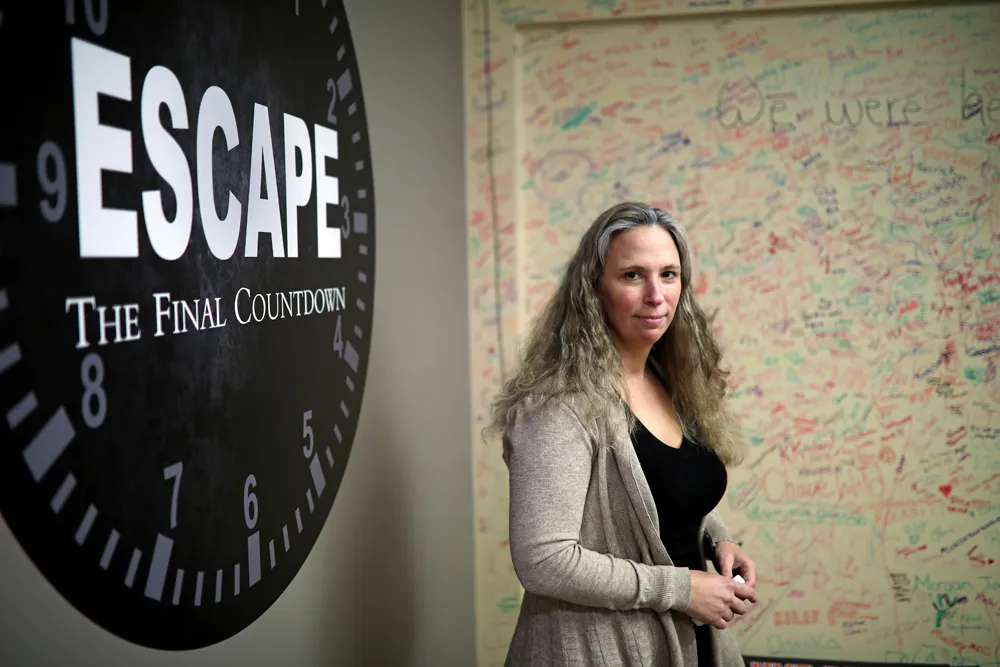
In August 2016 I started, Escape the Final Countdown, in Brandon Manitoba. I hadn’t even heard of an escape room in May of that year but when travelling to the East cost with my 11 and my 22 year old, we discovered them while looking for some interactive family fun. I was hooked. We played 5 different games on that trip, different puzzles, methods – I talked In August 2016, I started Escape the Final Countdown in Brandon, Manitoba. I hadn’t even heard of an escape room in May of that year, but while travelling to the East Coast with my 11-year-old and my 22-year-old, we discovered them while looking for some interactive family fun. I was hooked. We played five different games on that trip—different puzzles, different methods—and I talked to the owners, designers, and staff. I was enthralled.
As an entrepreneur, I saw the potential immediately. I knew there was nothing like it in Manitoba outside of Winnipeg, and I knew our communities were starving for entertainment options. As a storyteller and puzzle lover, I knew I could create something that would fill a void, connect and challenge people, and of course, I saw the financial potential. I had the business plan written before our plane landed.
Within three months of that trip, we opened our first room: The Great Granny Rescue, a scavenger-style puzzle room based on Little Red Riding Hood. The room looked like my grandmother’s living room, complete with a bowl of impossibly hard candies, and it smelled like fresh-baked cookies. I self-financed the project with $25,000, hired my adult son to help run it, and spent my marketing time and money educating Western Manitoba on what an escape room was.
I continued to research the industry, attend conferences, and speak to owners, designers, and—most importantly—my customers. What they liked about my designs was thrilling. More importantly, I learned what they didn’t like, and from that, my designs improved and my players returned.
I quickly learned that, unlike larger centres, I didn’t have the population density to invest hundreds of thousands of dollars into a new room. Games had no replayability, so I would quickly cycle through my target audience, who would then be clamouring for more. While larger markets could recoup large investments over years, my rooms had a maximum shelf life of about nine months. That meant my investments needed to stay in the thousands—not the hundreds of thousands, not even the tens.
I couldn’t rely on fancy props and gadgets. I needed strong storylines, creative and immersive décor, and solid puzzles that engaged—on a budget. I became a serious student of the escape room industry.
By December 2019, Escape the Final Countdown had expanded twice. We occupied over 3,500 square feet, had a staff of a dozen, a dedicated contractor for rebuilds, and manufactured many of our own props—including some custom electronics. We operated four full-time rooms, hosted groups of 2–12 players, ran corporate events and training sessions, and attended community events with portable escape games in tents, meeting spaces, and classrooms.
One of our greatest accomplishments was the Cash for Clues program. Every month, we sponsored a new local charity or organization—raising awareness, offering advertising space, and speaking to every player about their cause. Groups were invited to donate $5 for each clue they requested. A large glass jar collected donations. Some gave, some didn’t, and some gave more. In total, we raised over $25,000—without taking a single cut. I remain incredibly proud of that program.
I was active in global online communities for escape room owners and designers, sharing ideas, successes, and lessons learned. I connected with others in rural and low-density areas who faced the same challenge: how to continually build high-quality rooms on limited budgets. Again, I saw an opportunity.
My retired room designs—after serving roughly 1,000 players—still had value. I turned them into customizable packages: puzzles, flowcharts, step-by-step guides, videos, and marketing materials. I sold them—many times over. I ensured exclusivity within geographic regions and consulted with buyers on their builds.
A physical room might generate $25,000 before retirement. After retirement? That revenue could double—with zero overhead.
By March 2020, my designs were in 40 U.S. states and 13 countries. I was preparing to transition the brick-and-mortar business to my son so I could focus on design and consulting full-time—when COVID hit.
The impact on our business and industry was significant, but in the context of lives lost, financial losses felt secondary. The business remained closed while expenses continued. When our lease renewal came with a five-year term requirement and increased costs, I made the difficult decision to walk away.
My son returned to school, and I stepped into early retirement—intending to enjoy it. Within six months, I was bored. I missed the creativity. I missed identifying needs, solving problems, and creating something meaningful.
That’s what led me to Continuing Education in the post-secondary system.
The joy I get from identifying skills gaps and designing programs to meet them is the same joy I felt watching families solve puzzles together—the moment when everything clicks.
That “aha” moment is powerful.
Everyone deserves to feel that in their work and in their lives. People need to know their contributions matter—that they are creating value, solving problems, making something better.
We spend so much of our lives working. We deserve to feel inspired by it.
Whatever brings you that same sense of purpose—the same passion I found in combining storytelling, educational design, and entrepreneurship—that’s the career you deserve.
Life is short. Money comes and goes. You can always make more.
You can never make more time.
Find what drives you. And if what you’re doing doesn’t light you up when you talk about it—it’s not the right path.
Escape the ordinary.